
CINETECHGEAR / PRACTICAL GUIDE
Built to work with the gear you already own.
Standard connections, adaptable parts, repairability, and a connected production workflow: the thinking behind CineTechGear’s hardware and software.
Updated October 17, 2026
Your setup is bigger than one brand.
A camera kit is built over time. It may include an old stand you trust, a tripod plate from another manufacturer, a phone, a desktop workstation, and accessories made for very different jobs. CTG’s approach is to make useful tools that join that setup, with familiar interfaces wherever practical.
Non-proprietary is a design principle, not a claim of universal fit. We want the connection, dimensions, power requirements, and limitations to be clear enough that you can make an informed choice. A product should earn its place because it solves a problem.
Make the small connections useful.
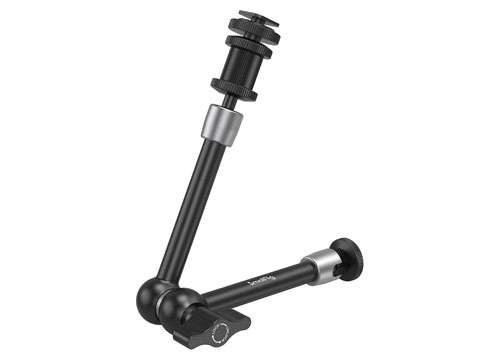
MiniCine mounting options use familiar 1/4″-20 and baby-mount connections. CineZip is being developed to attach equipment that has no threaded mount to a 1/4″-20 point using reusable zip ties. CinePort brings a USB connection onto a NATO rail. Each solves a practical gap between pieces of equipment.
The developing camera baseboard follows the same thinking: a cheese-plate platform, 15 mm rails, an Arca-Swiss interface underneath, and threaded mounting points. CineGrips join the base into a handheld unit. Final dimensions, loads, and supported configurations still need to be specified for the finished products.
Choose the part that does the job.
Light shaping, mounting, and power are separate decisions. You may want compact doors for one setup, deep doors around an eggcrate for another, or a small tabletop mount instead of a full stand. A family of parts lets the setup change with the work.
An interchangeable mechanical part and an electrically compatible accessory are different things. A connector that physically fits is not enough to establish a power match. Product pages identify the intended pairing, and unconfirmed combinations stay out of automatic recommendations.
Repair a part instead of replacing the whole product.
CTG supports repairability and the right to repair. The hardware direction favors accessible fasteners, replaceable pieces, and designs that can be serviced with ordinary tools where practical. 3D printing also lets us revise a part without committing every design decision to a production mold.
That approach supports small production runs and the possibility of making replacement parts from retained designs. It is not a promise of unlimited inventory or a lifetime warranty. Availability and service terms belong with the actual product. The aim is straightforward: keep useful equipment working longer.
Keep the creative work connected, too.
The same principle guides CineSuite, CineTrack, and CinePost. A take should carry useful context into the next stage: available camera settings, timing, tracking, and scene information alongside the media. The connected workflow is in development, with current capabilities and unfinished work explained on each software page.
CinePost’s developing import and export tools work with established scene formats and portable project copies. The goal is to make advanced work easier to reach while preserving the information that lets you keep making creative decisions. Exact format and platform support belongs in the product’s published capability list.
Show the work, including what is still being built.
CTG’s catalog includes existing designs, revised accessories, and products still in development. Original photographs and demonstrations remain useful, but their captions should distinguish an earlier version from the current configuration. A coming-soon product should say so, and an unconfirmed number should stay unconfirmed.
You should be able to see what a tool is for, how it connects, what it needs, and where it fits in your work before deciding to buy it.